COMPACT PLANTS

Water Regulatory Framework

International Water-Quality Regulations

Learn about the main regulations governing drinking-water quality and wastewater discharges throughout the region. Compliance with these standards is essential to protect the environment and public health.

COVERAGE
Latin America and the USA
FOCUS
Drinking Water + Wastewater
OBJECTIVE
Compliance-Based Design
Regulations
TECHNOLOGY AND COMPLIANCE

REGIONAL STANDARDS

REGULATIONS BY COUNTRY

Drinking Water

Resolución 2115 de 2007 - Establishes the Water Quality Risk Index (IRCA). This regulation classifies surface-water and groundwater sources into different risk categories and defines the microbiological, physical and chemical parameters required for water to be considered suitable for human consumption.

Wastewater

Resolución 0631 de 2015 - Establishes parameter limits and requirements for point-source discharges to surface-water bodies and sanitary sewer systems.

Resolución 1256 de 2021 - Regulates the reuse of treated wastewater and establishes quality standards for different applications.

Drinking Water

NOM-127-SSA1-2021 - Defines permissible water-quality limits for human use and consumption. This official standard establishes sanitary requirements for drinking water, including microbiological, physicochemical and organoleptic parameters.

Wastewater

NOM-001-SEMARNAT-2021 - Defines permissible contaminant limits for wastewater discharges to nationally owned receiving waters. It establishes maximum contaminant levels for discharges to groundwater, surface water and sanitary sewer systems.

Drinking Water

Safe Drinking Water Act (SDWA) - Under this law, the Environmental Protection Agency establishes the National Primary Drinking Water Regulations, which set maximum contaminant levels for more than 90 drinking-water contaminants.

Wastewater

Clean Water Act (CWA) - It is primarily enforced through the National Pollutant Discharge Elimination System, also administered by the EPA. This system regulates point-source pollutant discharges into waters of the United States.

Drinking Water

Norma COGUANOR NTG 29001 - Water for human consumption. Specifications.

Acuerdo Gubernativo 113-2009 - Sanitary Standards Regulation.

Wastewater

Acuerdo Gubernativo 236-2006 - Regulation for Wastewater Discharges, Reuse and Sludge Disposal.

Drinking Water

Acuerdo No. 084 de 1995 - Technical Standard for Drinking-Water Quality.

Wastewater

Acuerdo No. 058 de 1996 - Technical Standards for Wastewater Discharges to Receiving Waters and Sanitary Sewers.

Drinking Water

NSO 13.07.01:08 - Mandatory Salvadoran Drinking-Water Standard.

Wastewater

NSO 13.05.02:22 - Water Quality. Wastewater Discharges to Receiving Waters.

Drinking Water

Decreto N° 38924-S - Drinking-Water Quality Regulation.

Wastewater

Decreto N° 33601-MINAE-S - Wastewater Discharge and Reuse Regulation.

Drinking Water

Reglamento Técnico DGNTI-COPANIT 21-2019 / 23-395-99.

Wastewater

Resolución 252 de 2020 del Ministerio de Salud (MINSA) y los Reglamentos COPANIT 35-2000 y ACP 2610 HIP 111 (específico del Canal).

Drinking Water

Norma NORDOM 1 - Water quality for human consumption.

Wastewater

Norma NA-04/IDARD - Environmental Standard for Discharge Control to Surface Waters, Sanitary Sewers and Coastal Waters.

Drinking Water

Regulación DIR-ARCA-RG-014-2025 y la Norma Técnica Ecuatoriana NTE INEN 1108.

Wastewater

Ley Orgánica de Recursos Hídricos (LORHUYA) y el TULSMA (Texto Unificado de Legislación Secundaria del Medio Ambiente) Libro VI, Anexo 1.

Drinking Water

Decreto Supremo N° 031-2010-SA - Regulation on Water Quality for Human Consumption.

Wastewater

Decreto Supremo N° 004-2017-MINAM - Environmental Quality Standards (ECA) and DS 003-2010-MINAM - Maximum Permissible Limits (LMP).

Drinking Water

Norma Chilena NCh 409/1.Of2005.

Wastewater

Decreto Supremo 90 - Regulates discharges to marine and inland surface waters, and Decreto Supremo 46 - Regulates infiltration into groundwater.

Drinking Water

Código Alimentario Argentino (CAA) - Specifically Articles 982 and following, supported at the federal level by the Federal Drinking Water and Sanitation Law.

Wastewater

Because of its federal structure, regulation is largely managed at the provincial level (for example, Ley 14782 en la Provincia de Buenos Aires) and through specific watershed authorities such as ACUMAR).

TECHNICAL REFERENCE

GLOSSARY OF WATER-QUALITY PARAMETERS

BOD (Biochemical Oxygen Demand)

Measures the amount of dissolved oxygen consumed by aerobic microorganisms while degrading organic matter in a water sample over a specific period, generally five days at 20°C, known as BOD5. It is a standard indicator of biodegradable pollution in wastewater and is expressed in milligrams per liter (mg/L).

COD (Chemical Oxygen Demand)

Represents the equivalent amount of oxygen required to chemically oxidize nearly all organic matter, along with oxidizable inorganic material, in a water sample using a strong oxidizing agent. Unlike BOD, COD does not depend on bacteria, so the test is much faster. COD is generally higher than BOD, and the relationship between both values helps determine wastewater biodegradability.

Coliforms (Total, Fecal and Escherichia coli)

These groups of bacteria are used in microbiology as indicator organisms. Their presence in water may suggest recent contamination from human or warm-blooded animal feces and can signal the possible presence of disease-causing pathogens. Drinking-water standards commonly require zero detectable coliforms.

pH (Hydrogen Potential)

Measures water acidity or alkalinity based on hydrogen-ion concentration. It uses a logarithmic scale from 0 to 14, where 7 is neutral. A pH outside regulatory ranges, commonly 6.5 to 8.5 for drinking water, may accelerate pipe corrosion, dissolve heavy metals or reduce chlorine disinfection effectiveness.

Turbidity

Measures the loss of water transparency caused by suspended particles such as clay, silt, fine organic matter, plankton and microorganisms. It is measured in Nephelometric Turbidity Units (NTU). Turbidity is a critical control parameter because suspended particles may shield viruses and bacteria from disinfection.

TSS (Total Suspended Solids)

Represents the mass of organic and inorganic solid material that is not dissolved in water and is retained by a standardized filter. It is a key wastewater-discharge parameter because excess solids can damage aquatic ecosystems by blocking sunlight and settling on the bottom of receiving waters.

Heavy Metals (e.g., Arsenic, Lead, Mercury)

High-density chemical elements that may be toxic even at very low concentrations. Unlike organic matter, heavy metals do not degrade naturally and can bioaccumulate in organisms and food chains, causing severe neurological, kidney and liver damage.

QUALITY CONTROL

SYNERTECH PLANT TESTING AND VALIDATION

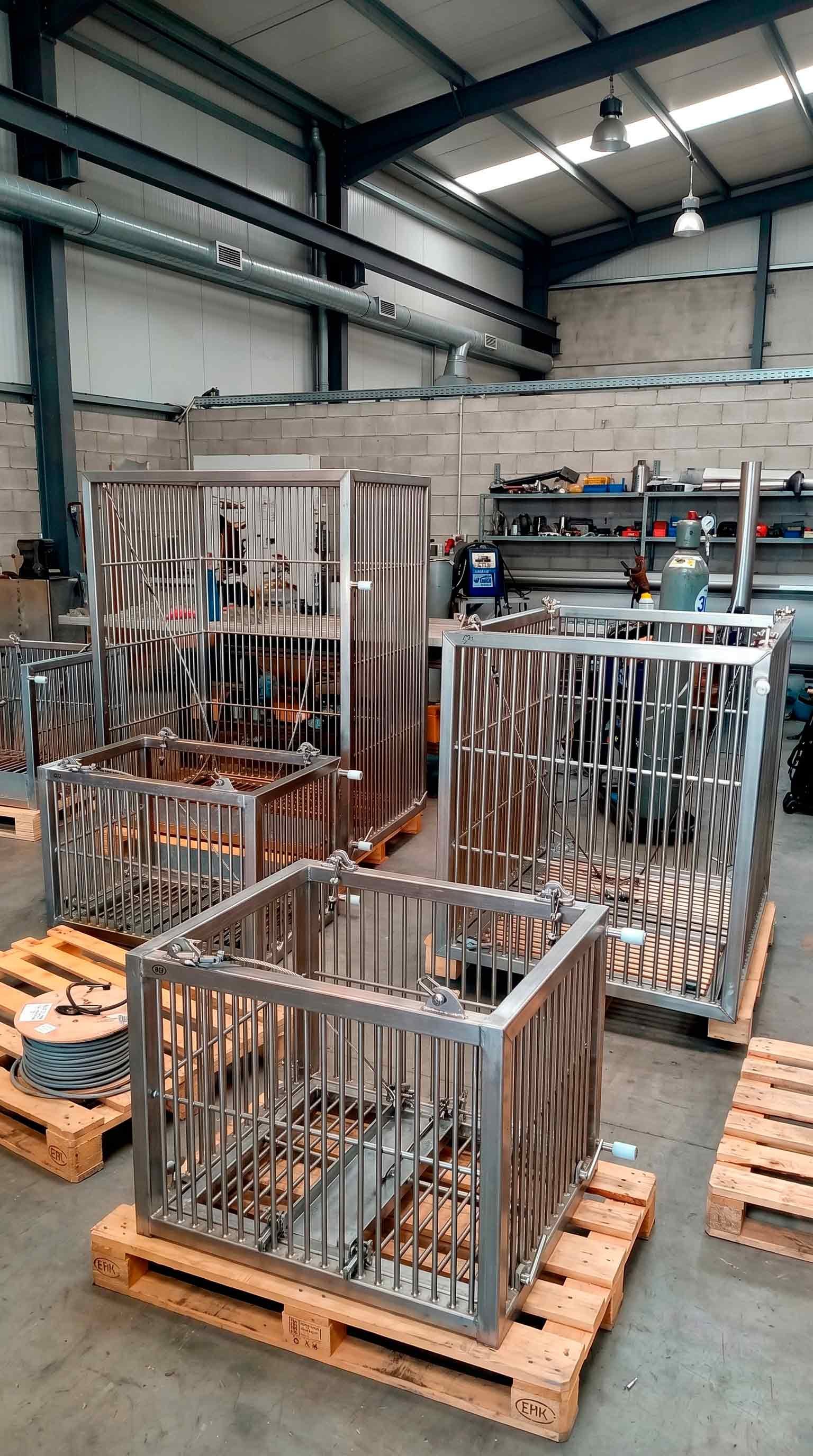
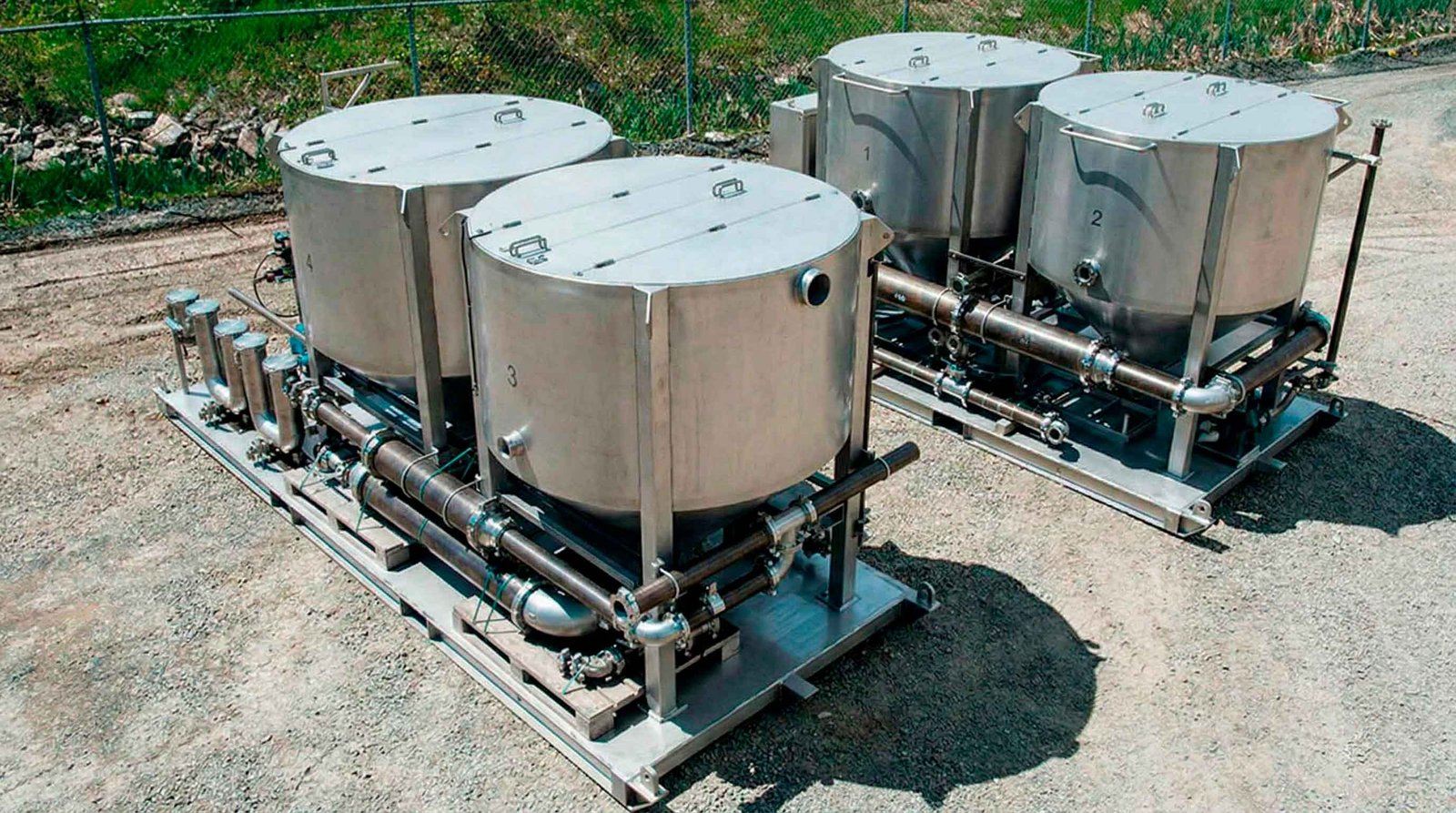
Before final delivery, Synertech performs mechanical, electrical and operational testing to verify structural integrity, leak tightness, performance and field compliance.

Pressure Vessels and Piping

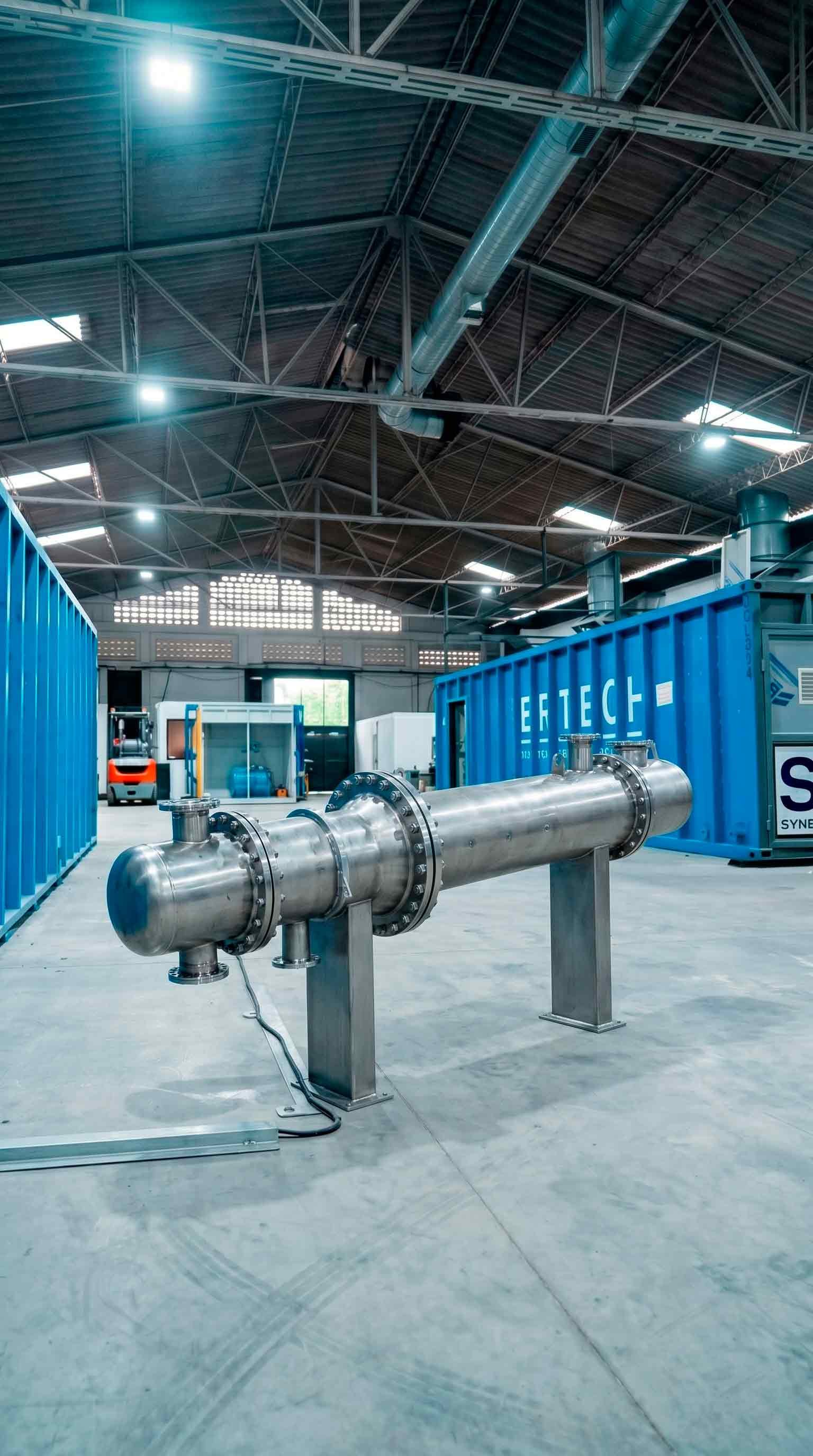
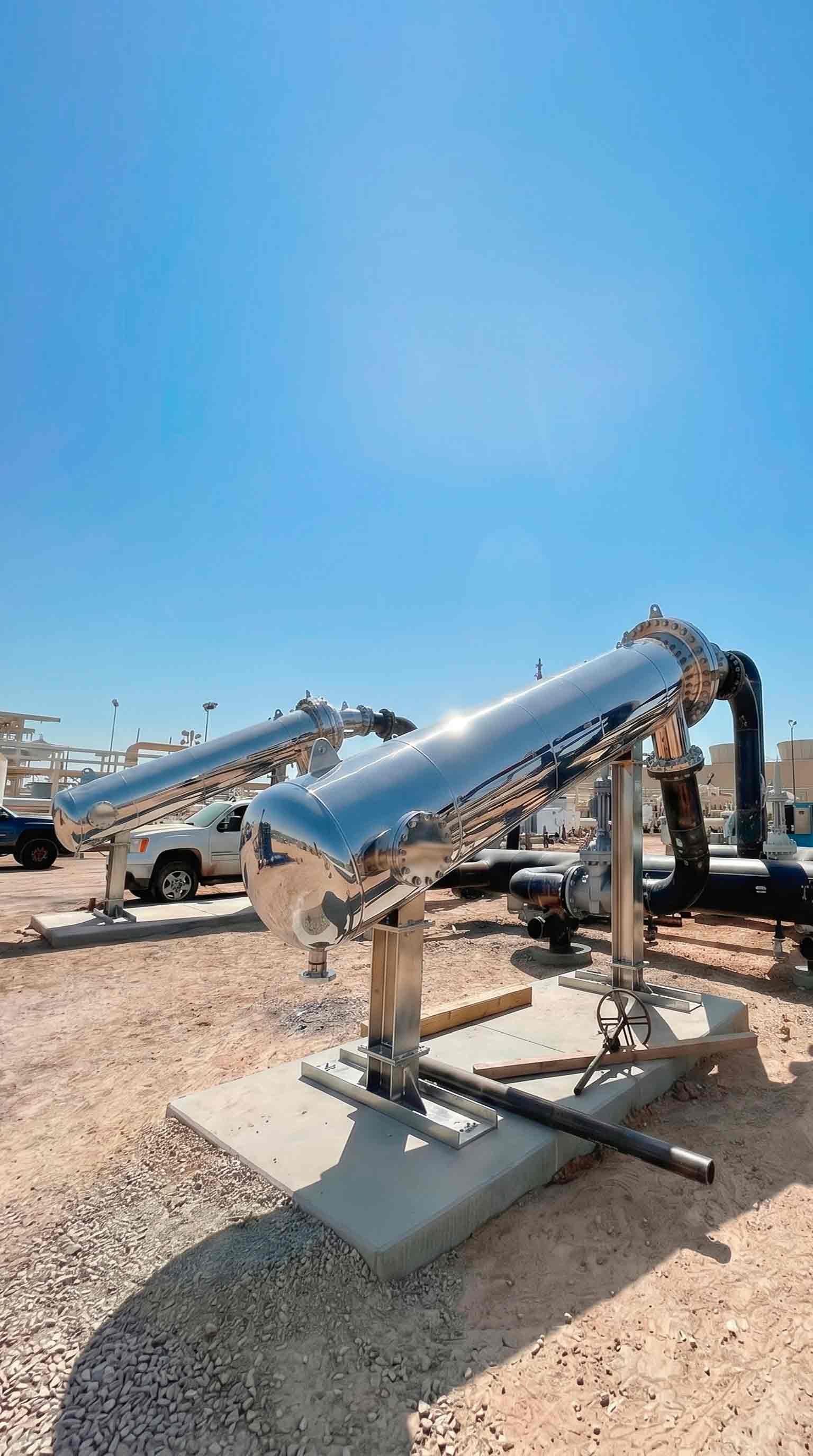
They are tested under ASME Section VIII and ASME B31.3 guidelines at pressures above design pressure, typically 1.3 to 1.5 times higher, to verify the absence of plastic deformation or mechanical failure.

Atmospheric Tanks and Instrumentation

Storage tanks are verified under API 650 by filling them to their design capacity. Synertech also requires pressure gauges compliant with ASME B40.100, with readings between 25% and 75% of the scale for maximum accuracy.

These tests complement hydrostatic testing by detecting microleaks in tanks, flanged joints, threaded connections and valves.

Vacuum box testing

This test is especially used on tank-bottom welds to detect minimal air or liquid leakage.

Pneumatic Testing

Low-pressure air and a soap solution may be used on roofs, nozzles and connections to identify localized leaks.

Liquid penetrant testing performed under ASME Section V detects surface discontinuities such as porosity and microcracks in carbon-steel or stainless-steel welds.

  1. Thorough cleaning of the surface or weld.
  2. Application of visible or fluorescent penetrant.
  3. Removal of excess surface penetrant.
  4. Application of developer to reveal discontinuities.

Electrical and Control Testing

These tests verify emergency stops, interlocks, motor protection, electrical protection, continuity, motor rotation, sensor calibration and PLC I/O signals.

Hydraulic and Mechanical Testing

These include clean-water flow tests, design flow and pressure verification, filter pressure-drop checks and continuous operation to assess vibration and bearing temperature.

Cold Pre-Commissioning

Performed without process fluid to confirm equipment alignment, piping blowing and flushing, loop checks and energization of main control panels.

Hot Commissioning

Process fluid is introduced to tune PID controls, inoculate biomass when applicable, validate effluent quality and train client personnel before formal handover.

WE ANSWER YOUR TECHNICAL QUESTIONS

FREQUENTLY ASKED QUESTIONS ABOUT
WATER REGULATIONS

Understanding environmental regulations is essential to ensure that your project complies with current legal requirements. Noncompliance may lead to significant fines, project shutdowns and legal penalties. It also supports environmental and public-health protection.

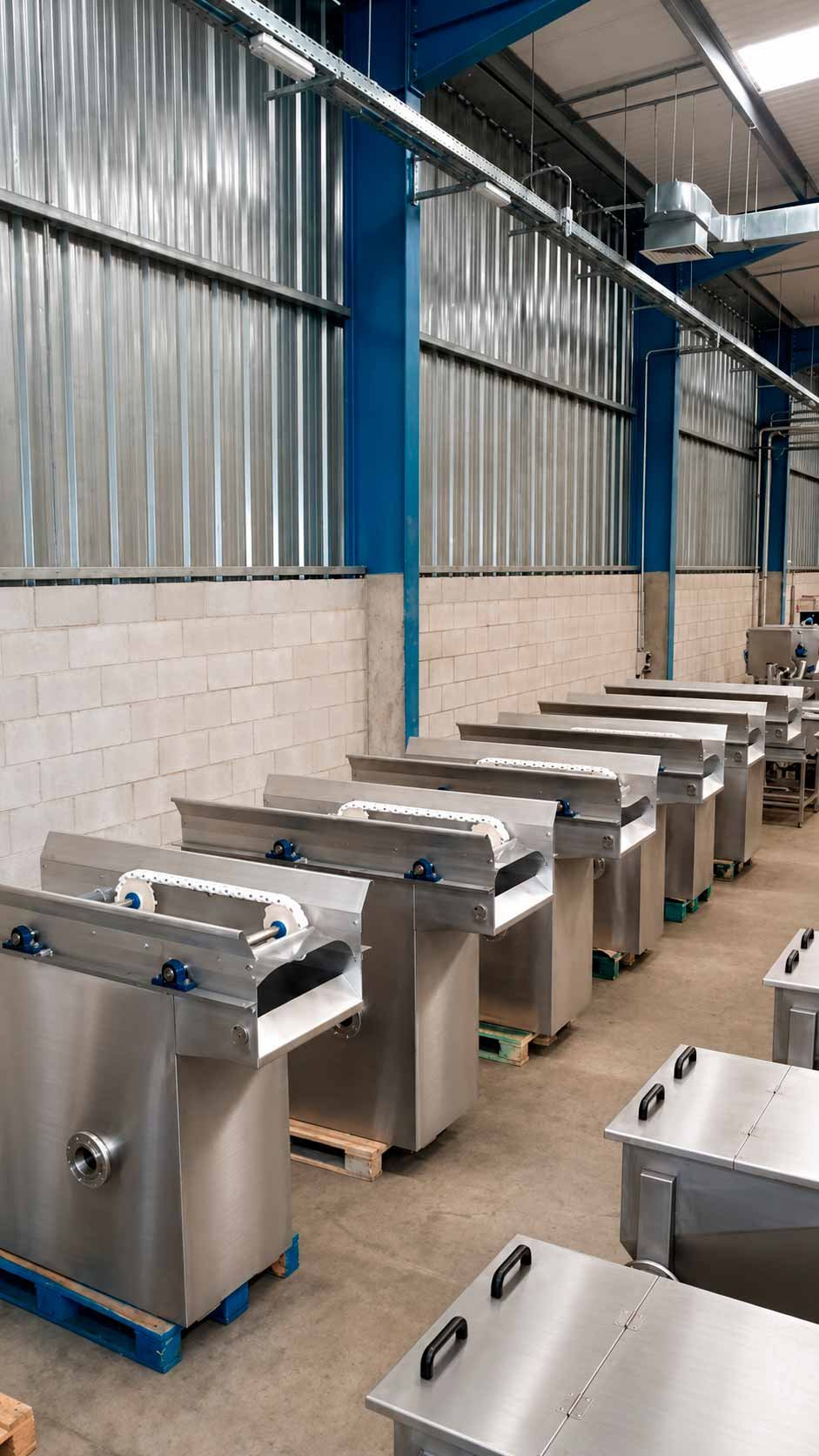
At Syner Tech, we design and manufacture customized treatment plants according to each country's specific regulations. Our technical team evaluates local regulatory requirements and designs the system to meet the established parameters.

Commonly monitored parameters include BOD, COD, TSS, pH, fecal coliforms and heavy metals. Specific requirements vary by country and applicable regulation.

Yes. Syner Tech has experience implementing water-treatment solutions throughout Latin America and worldwide. Our multidisciplinary team understands regional requirements and provides comprehensive guidance for regulatory compliance in different jurisdictions.

Solutions at an
Industrial Scale

More than 35 years manufacturing and implementing treatment plants and purification equipment under demanding international standards.

HEADQUARTERS

Cra 70 No. 75 - 78, Barranquilla, COL

DIRECT ENGINEERING LINE

+57 301 317 9017

Manufacturing in Stainless Steel (304/316L)
Compliance with Local Environmental Regulations
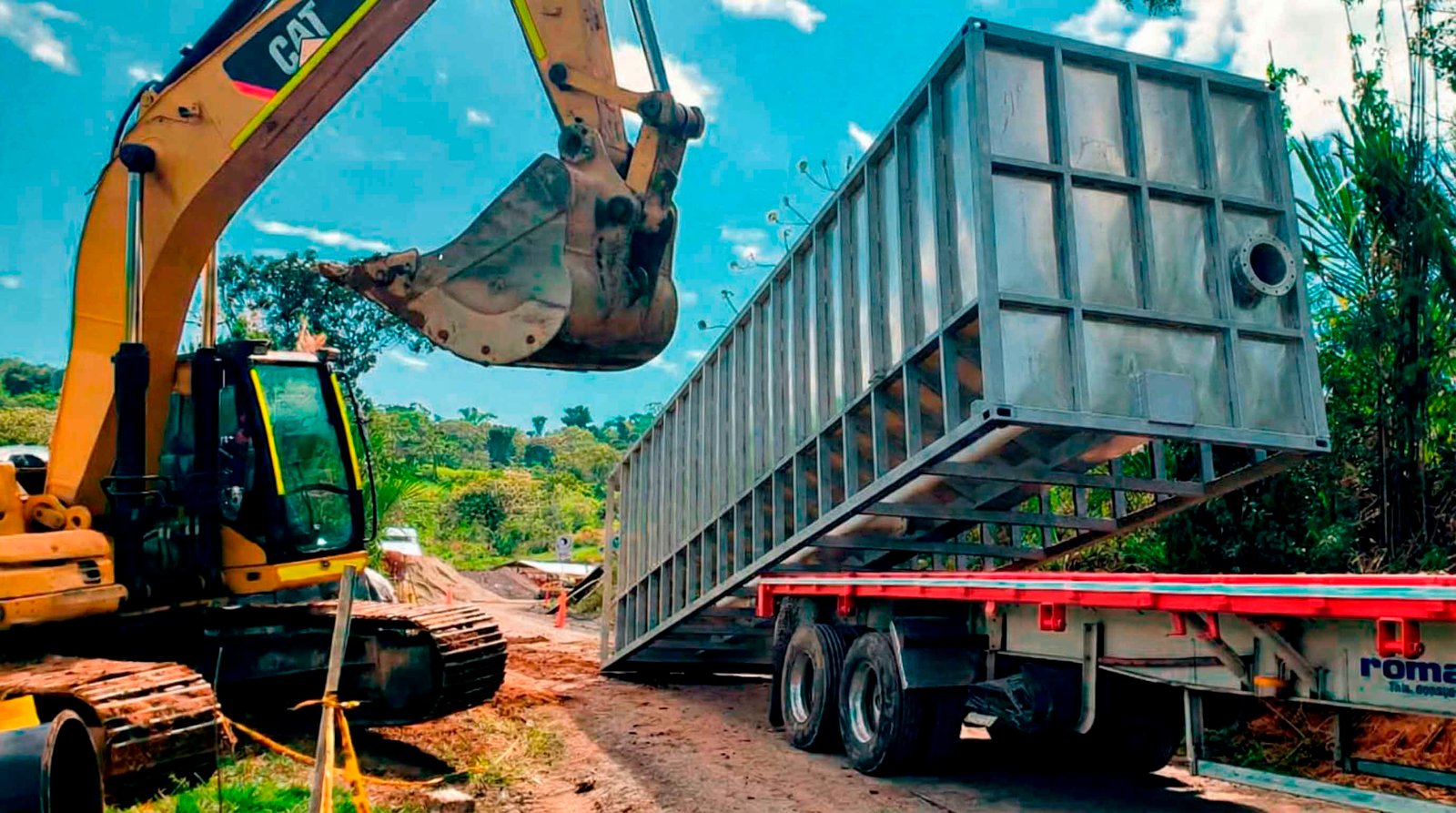
Engineering, Shipping and Installation throughout LATAM

TECHNICAL QUOTATION REQUEST

Complete the fields for an accurate engineering assessment.